How Badly Do You Want to Grow Your Brand on Social Media?
May 09, 2026
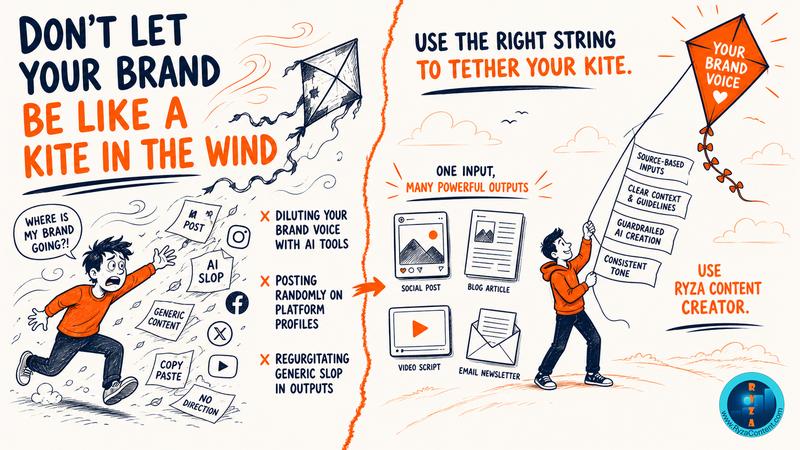
Creating social media content often breaks down in the same place: ideas stay in your head, drafts take too long, and brand voice starts to drift. Teams, solopreneurs, influencers, and individual creators all need more output, but they also need better decisions about style, quality, and consistency.
Ryza Content Creator is built around that tension. It helps users ideate, automate, and elevate content without losing voice or structure. The platform brings drafting, editing, visuals, videos, and posting workflows into one place, using guardrailed AI-adjacent creation with precision and purpose.
This matters because fast output alone is not enough. Content needs to reflect expertise, uploaded research, themes, and visual inputs. It also needs to support business goals like stronger visibility, better campaign performance, and more qualified leads. In this guide, we will look at how Ryza Content Creator works, what makes its workflow different, how creator plans align with different needs, and what to consider when building a more conscious content process.
How Ryza Starts With Better Content Inputs
Ryza begins with inputs that reflect real working material, not blank-page guessing. Users can provide themes, PDFs, images, and their own expertise.
- This means ideas are grounded in source material from the start.
- It also reduces the risk of generic content and voice drift.
The platform then uses those inputs to generate content ideas quickly. That ideation stage is designed to turn expertise and research into usable direction for posts, blogs, newsletters, carousels, images, and videos.
How Guardrailed AI Creation Supports Brand Voice
Ryza does not position speed as a substitute for quality. Its process uses guardrailed AI-adjacent output to help keep content precise, polished, and aligned to voice and style.
- Voice training helps outputs sound like the creator.
- Refinement tools let users edit, save, and prepare content for posting.
This structure supports authenticity. For influencers and businesses especially, protecting brand identity matters as much as producing more content.
How Multi-Format Content Production Works
Ryza converts ideas and inputs into several content types across supported platforms. Outputs can include text, images, videos, slides, newsletters, blogs, carousels, sales pages, pitch decks, and email drips.
Short production cycles are central to the model:
- 10 platforms supported
- 9 types of content
- 5 tools available
- 3 steps to finish
That workflow is designed to help users move from concept to finished asset with less friction and less scattered production work.
How Creator Plans Match Different Business Needs
The platform organizes features by creator type. Individual Creators can produce 1 post per day and 30 per month, plus 4 short videos. Influencer Creators can produce up to 7 posts per day and 40 per month, plus 10 short videos and branded visuals. Solopreneur Creators can create up to 10 outputs per day and 60 per month, plus 15 short videos, KPI and ICP alignment, and 50 ICP prospect profiles per month.
This tiered structure helps users choose based on volume, branding needs, and campaign complexity rather than guessing what tools they need.
A Solopreneur Workflow From Strategy to Output
A Solopreneur Creator plan shows how the platform connects planning and production. This user needs a consistent business presence on social media and wants content tied to KPIs and ICPs. They can create up to 10 outputs a day and 60 a month.
The workflow starts with themes, products, services, and source materials. Ryza then supports content generation across social posts, carousels, slide decks, sales pages, and email drips. It also provides up to 50 ICP profiles each month, which helps shape outreach strategy and messaging decisions.
From there, the user can refine drafts, manage visuals and videos, and prepare content for multiple channels. A 30-day content calendar add-on can further organize themes, posting times, and visual recommendations. The result is not just more content, but a more connected production system built around faster launches and stronger campaign consistency.
Where Content Systems Often Lose Precision
The biggest issue in content production is not always lack of ideas. It is often lack of alignment. Are your inputs clear enough? Is your voice being protected? Are your outputs matching the right audience and business goals?
These questions matter because high volume can create more risk when workflows are fragmented. A creator may produce many assets, yet still struggle with consistency, editing, or brand presentation. Teams may also need compliant, high-quality content, which raises the need for oversight and structured workflows.
Ryza addresses this by combining source-based creation, voice training, refinement, and posting support in one system. For more advanced users, KPI targeting, ICP profiles, and dashboards add a data-led layer to content decisions.
Steps to Build a More Conscious Content Workflow
Use these steps to make the process practical:
1. Gather core source material: Start with your themes, PDFs, images, and subject matter expertise. This gives the system better data and leads to better content decisions.
2. Define voice and brand rules: Use voice training, logos, colors, and styling choices where available. This helps reduce drift and keeps content authentic.
3. Match plan to output needs: Choose based on your monthly volume needs, video use, and business complexity. Individual, Influencer, and Solopreneur plans support different levels of production.
4. Build for multiple formats: Do not stop at single posts. Use the platform’s ability to create blogs, newsletters, carousels, videos, and sales materials from the same strategic direction.
5. Review performance signals: Use analytics dashboards, KPI alignment, and ICP targeting where available. Better content comes from better feedback loops over time.
Why Conscious Content Creation Has Lasting Value
Ryza Content Creator presents content production as a system, not just a drafting shortcut. Its structure connects ideation, automation, and refinement so creators can move faster while protecting quality, voice, and business relevance. That matters across many use cases.
Individuals want to show up professionally. Influencers need consistency without losing authenticity. Solopreneurs and teams need output that supports campaigns, lead generation, and brand reputation. In each case, the goal is the same: create better content with less friction and less risk. The long-term lesson is simple. Content works best when it is built from clear inputs, shaped by strong voice controls, and connected to measurable outcomes.
As your brand grows, are your content systems helping you make better decisions or just produce more?
Sign up here: https://www.ryzacontent.com/