Conscious Content Creation Monthly Newsletter
June 01, 2026
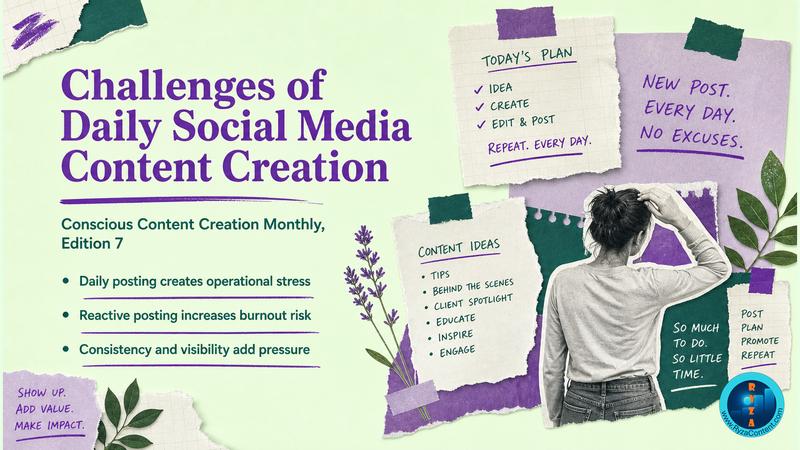
You sit down to create one post, then realize you need another tomorrow, and another after that. The pressure is not only about having ideas. It is about having good ideas, keeping your quality high, staying visible, and still sounding like yourself.
That is the real stress in daily social media content creation. The work looks simple from the outside. In practice, it asks for constant creativity, consistency, and meaningful interaction across platforms like LinkedIn, Instagram, or Twitter (X). Over time, that can turn into stress, fatigue, and a quiet drop in quality.
In fact, this is such a common stress point among creators that LinkedIn did a whole article on this topic and included top voices and their observations about this: https://www.linkedin.com/top-content/writing/content-creation-techniques/challenges-of-daily-social-media-content-creation/
In response to this stress, many creators push harder. You spend more time online and engage in more reactive posting. There is more pressure to perform. But that often increases the risk of burnout and makes your content feel less grounded in your real voice.
A better approach is not to create from scratch every day. It is to build a system that protects your energy while helping you stay present. This issue looks at what makes daily creation so difficult, what it costs when the problem goes unmanaged, and what practical decisions can make the process more sustainable.
When Daily Content Becomes a System Problem
Daily posting is often framed as a discipline issue, but the deeper challenge is usually operational. You are not just writing. You are generating ideas, shaping them into platform-ready content, deciding what to publish, and trying to maintain consistency without losing authenticity.
That creates a pattern many professionals recognize. The work expands into every gap in the day. Content starts to compete with the rest of the business. And because each post feels urgent, it becomes harder to step back and build a repeatable process.
Here is the structure of the problem:
- Constant creative demand: Daily creation requires a steady flow of fresh content ideas. Without a clear system, that demand can quickly drain attention and motivation.
- Quality versus quantity tension: Staying active matters but posting often can reduce depth if every piece must be built from nothing. The result is often more output with less real value.
- Engagement overhead: Content creation does not stop at publishing. Social media also asks for meaningful interaction, which adds another layer of time and cognitive load.
- Authenticity pressure: Many creators feel pulled between sharing genuine insights and chasing likes or perfection. That tension can slowly distort both message and voice.
- Workflow fragmentation: When ideation, drafting, editing, and posting happen in separate tools or moments, consistency becomes harder to maintain.
What You Risk When the Process Stays Reactive
If this challenge is left unmanaged, the cost is not only creative fatigue. It affects how you show up, how your business is perceived, and how fast you can move on the work that matters most.
What happens when your content process depends on daily improvisation? You spend more time deciding than creating. You carry open loops all day. You delay posts because they do not feel ready or publish quickly and feel they do not reflect your standards.
There is also a brand risk. If your voice shifts from post to post, or your content becomes inconsistent, your audience gets a weaker signal about who you are and what you stand for. That can reduce visibility, trust, and the professional clarity that content is supposed to build.
For solopreneurs and teams, the business trade-off is sharper. Time spent wrestling with content is time not spent on leads, campaign performance, conversions, or other decisions that move growth forward. If your workflow creates friction every day, how much energy is it pulling away from the rest of your business? And if your content lives mostly in your head, what opportunities never make it onto a platform?
How to Make Daily Creation Sustainable
The goal is not to do less carelessly. It is to create more deliberately, with less friction and less risk of burnout. Start with a system that reduces repetitive strain and protects your voice.
- Set firm creation boundaries: Allocate specific times for content creation and social media engagement. This keeps content from taking over the full day and helps you maintain focus on the rest of your business.
- Repurpose pillar content: Take high-performing or pillar content and break it into smaller related posts. This keeps your feed active without forcing you to reinvent the wheel every day.
- Prioritize real experience: Share stories and insights that reflect your genuine experience instead of chasing likes or perfection. This makes the process more sustainable and helps your content stay aligned with your real voice.
- Centralize your workflow: Use a process or platform that helps you move from idea to formatted output in one place. For instance, Ryza is built around this flow by helping users ideate, automate, and elevate content creation with precision and minimal effort.
- Use source material deliberately: Input themes, PDFs, images, and your expertise to create posts, newsletters, blogs, carousels, images, videos, or slides in your voice and style. This supports consistency, reduces drift, and helps turn existing knowledge into publishable content faster.
If LinkedIn is your priority, Ryza Content Creator also includes a LinkedIn Profile Optimizer Tool for subscribers, covering your professional headline, optimized about section, and custom banner in minutes.
A Better Content Rhythm Is a Better Business Decision
Daily content creation is hard because it asks for repeated creative output under constant visibility. That pressure is real. So is the temptation to solve it with more effort instead of better structure.
The better path is to protect your time, reuse what already works, and build around authenticity rather than perfection. That does not remove the work, but it makes the work more sustainable and more useful for your business. If your content deserves to be on a platform, not in your head, what would change if your process finally supported that?
Explore our latest features at: www.ryzacontent.com
- LinkedIn Profile Optimizer Tool: Use this to optimize your professional LinkedIn headline, About section, and Banner in minutes.
- 30-day Free Trial of the Individual Creator Plan: We are confident that our system can help you create consistent content without burnout.
- Read our blog about Growing Your Brand on Social Media: https://www.ryzacontent.com/blog?post=1778349638.745402